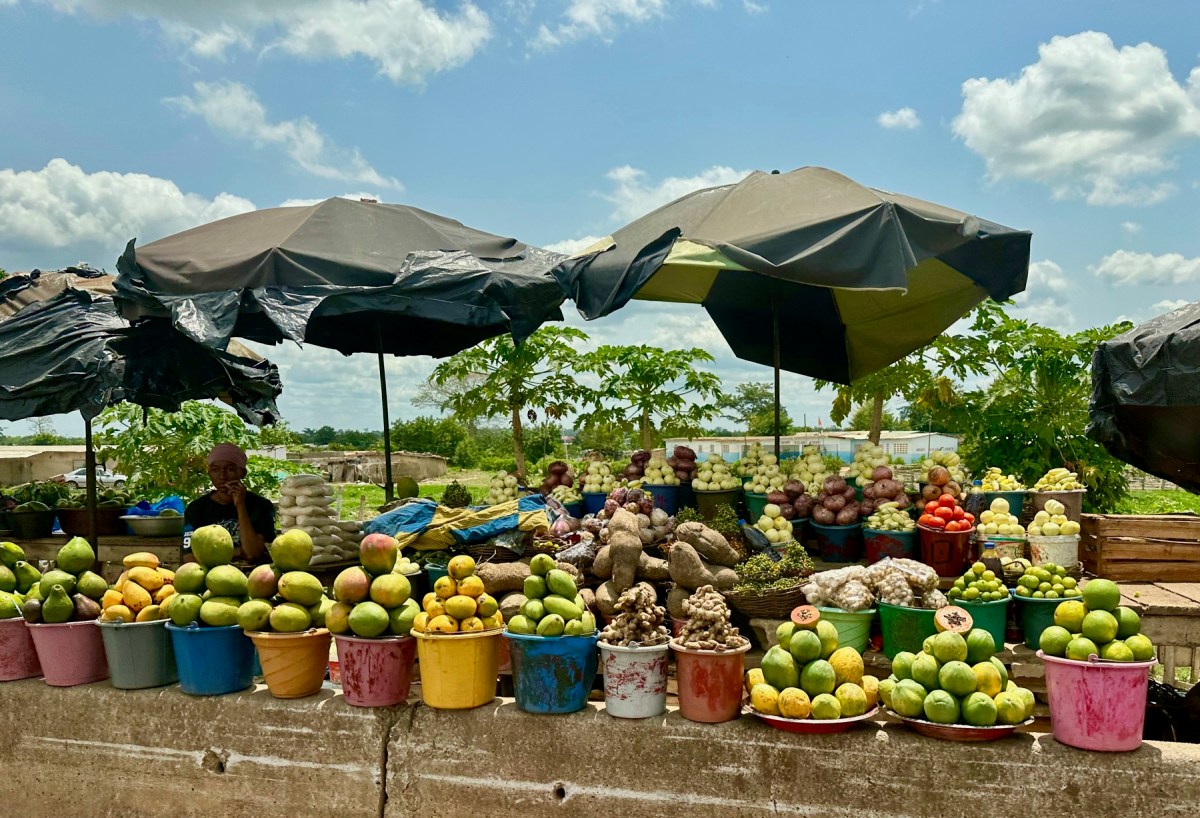
The last stop on my West Africa trip in April was Liberia, and anyone who has ever been there will recognize the photo above as most certainly a regular sighting in that country.
I lived in Monrovia, Liberia in 2018 for about eight months; it was intended to be a long-term move, but as I got integrated into the work and life in Monrovia, it was clear that the job wasn’t right, and I wasn’t right, and things in general just weren’t set up in a way that would promote flourishing for any of us. I’m grateful for that experience and I learned a lot, but I was also anxious about returning to Liberia and facing some of those really hard things again; thankfully, while I did manage some stressful situations, overall the trip was a success!
I was relieved, after many days in Francophone countries, to be returning to a place where communication was easier, and I was also relieved when the three flights it took for me to get from Dakar to Monrovia all went on without disruption. The apartment I was staying at was next door to an old friend and my colleague from Ethiopia was already there, and thankfully all of this trip was in the same time zone so I was well acclimated upon arrival and able to jump right in to the action. So many things to be grateful for from day one!
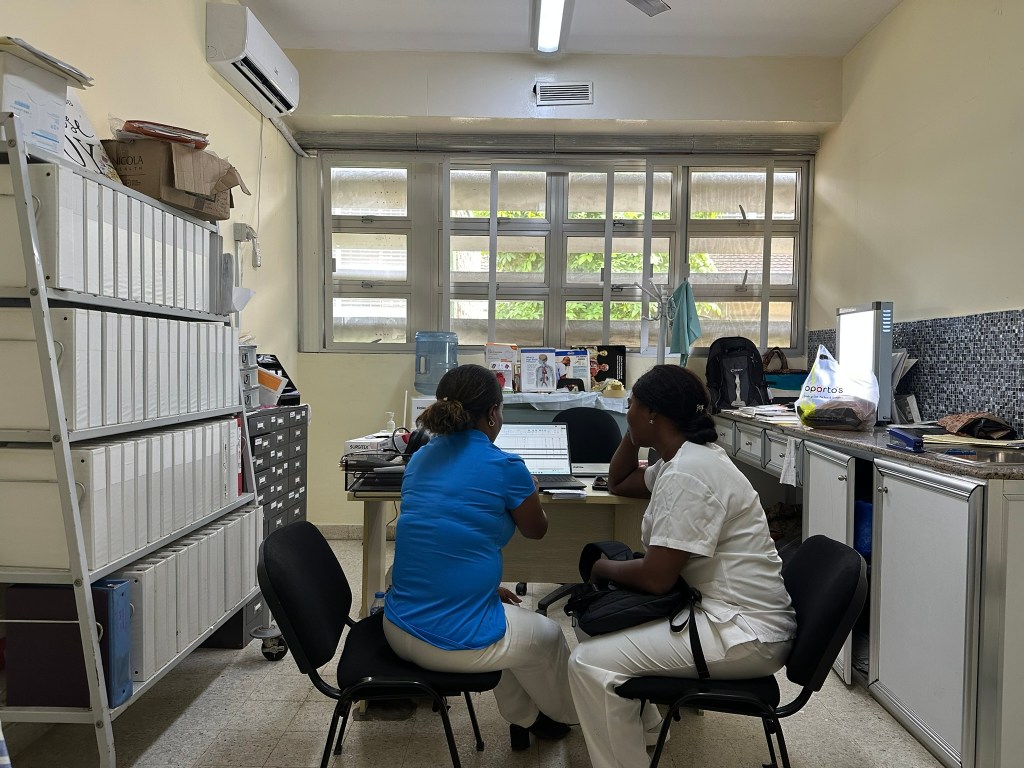
This was my first NeuroKids trip to actually see and participate in a surgeon training. Similarly to our previous trip to Kijabe, Kenya, Meski, my colleague from Ethiopia, was there to train our new coordinator, and we had both arrived a few days before the surgeon training was supposed to start. I’m so glad we planned it that way, because upon arrival, we realized that we didn’t have the right cleaning materials for the equipment and we hadn’t gotten an patient files for training, among other random things that needed sorting, so I spent some time trying to figure out those things while also meeting with and making critical connections with people at the Ministry of Health, without whom we could not run our programs!
It was a busy few days with more surprises than I would generally like to experience, but we managed to get what we needed, some at the very last minute. The next few days were surgeon training, where more surprises awaited us – the cautery tool didn’t work as intended, the sterilizing processes was new to everyone, and the anesthesia team struggled to get intravenous lines into the patients. BUT, thankfully, we were able to accomplish much of what we intended to accomplish; patients got surgery, the surgeon and the coordinator learned a lot, and we as a programs team also came away with many different ideas of how we can improve the training and prevent some of these issues in the future.
The next stop on my West Africa trip was a quick trip to Senegal. NeuroKids is considering building a program in Senegal, which is a hub in Francophone Africa for the training of surgeons and medical staff, so I wanted to pop in and meet the potential partners and try to understand a bit better the situation there along with the training system.
I haven’t spent much time in Senegal but it’s always been high on my list of places to spend more time, and this short trip only whetted my appetite for more! It’s a big hospital with a huge potential impact, and definitely a place I’m recommending for further program expansion.
I ended up having a free day here on a weekend, which was a much welcomed pause in what had been a crazy week of travel and long days. I was able to stretch my legs and walk along the Corniche while enjoying some cooler breezes and a stop for Lebanese food. Enjoy!
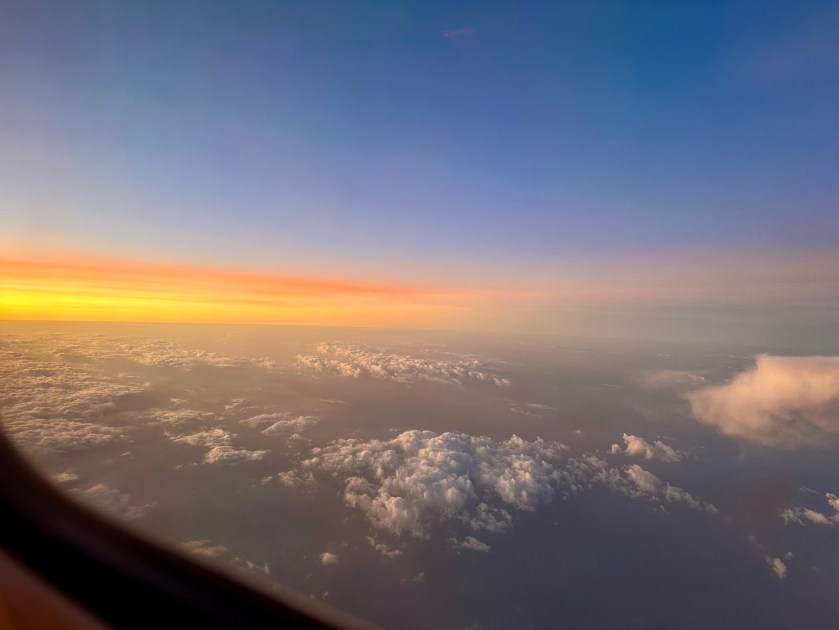
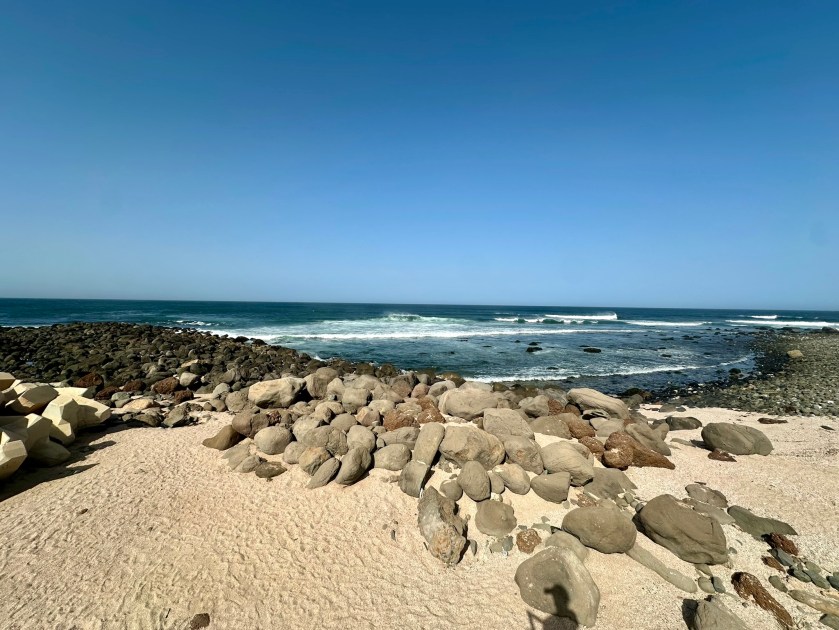
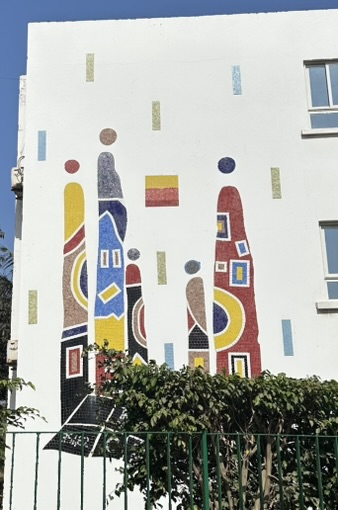
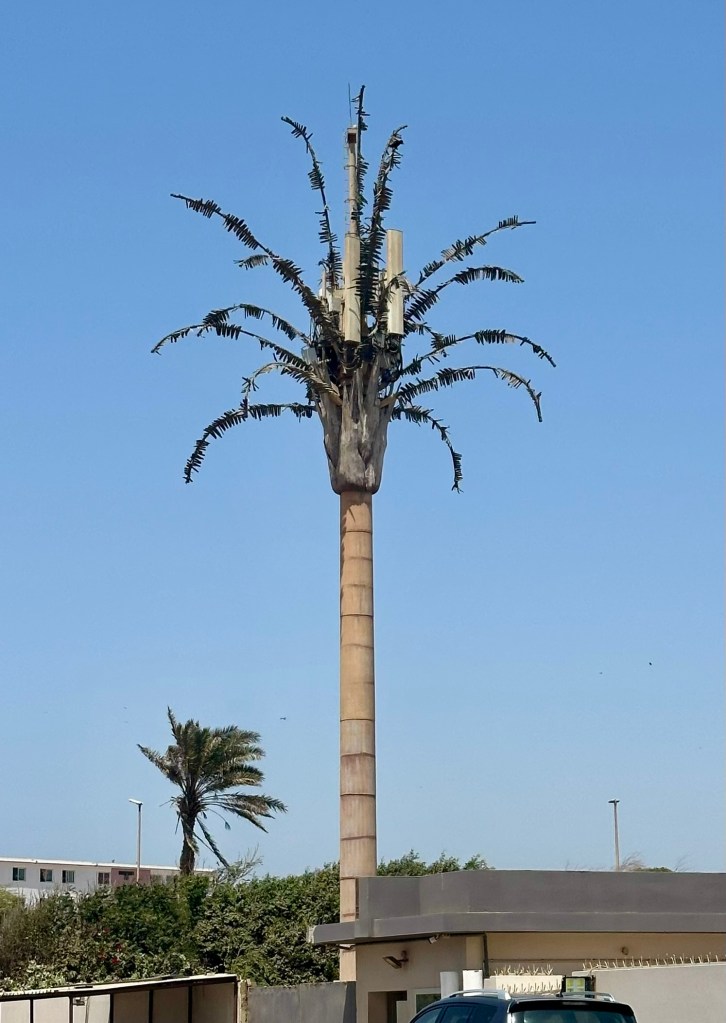
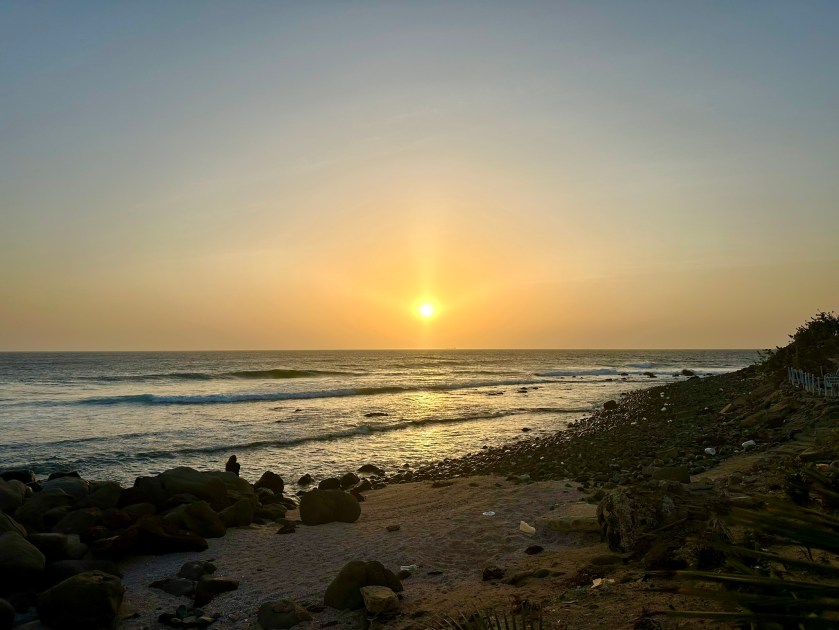
I love airplane sunsets – flying over West Africa from Abidjan to Dakar.The Atlantic from in front of my hotelPlace du Souvenir AfricainPlace du Souvenir AfricainLebanese food in West Africa just slays. Some of my favorite food memories in this region are while eating shawarmas and moutabal. A cool mosaic on the side of a building at the University.A valiant effort at hiding a cell towerBaobab juice! If you ever have the chance to try it, do! It’s just kind of sweet and fruity but really good for you and I love when I find it on travels! Beauty.
I’m back in West Africa, a region my heart loves almost more than any other in the world. My global wanderer era began here as a Peace Corps Volunteer, posted for two years in a small village in the middle of Benin. The Peace Corps experience of immersion in culture, language, and living was one of the hardest and most rewarding experiences of my life. In the time since then, I have spent additional significant time in West Africa and somehow always keep coming back to this region, though it’s been quite awhile since my last visit.
First stop on this trip: Cote D’Ivoire. One of the few countries in this region I’ve never been to, and was honestly a little anxious about. I haven’t spoken French in awhile, would it come back to me sufficiently? I don’t know this particular country, cultural nuances, expectations, or particular safety issues, would that be a problem? Would I feel as comfortable here as have felt elsewhere?
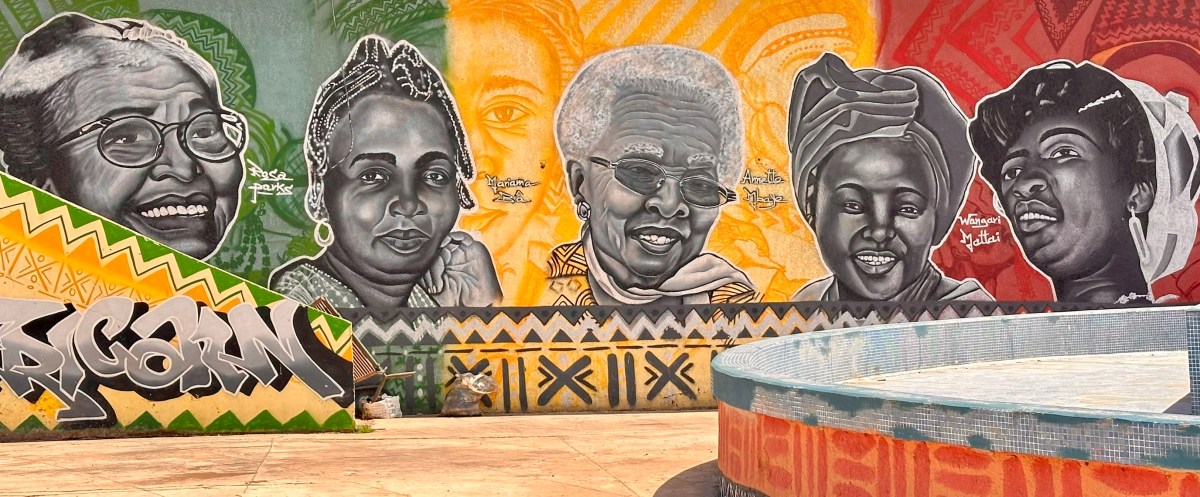
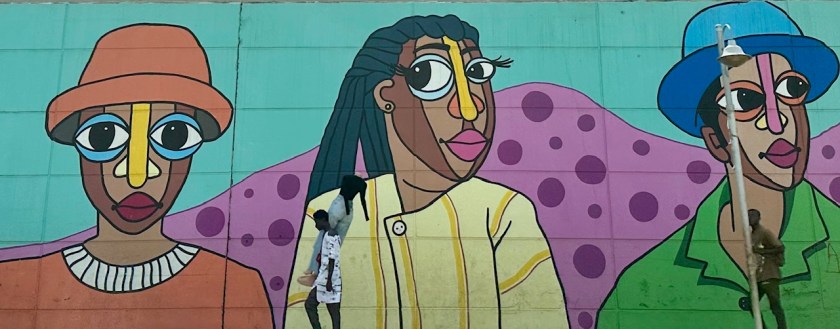
Street art in Bouake
I need not have worried. The terre rouge, the bright fabrics, the warm kindness and humid air and French greetings welcomed me like an old friend.
The purpose of my trip was to, very simply, understand what is going on with our site here. NeuroKids has supported programming here for about two years, but have struggled a bit with communication, language, collaboration, and understanding of context. I came in with some preconceived ideas of what I would find, and based on what I knew about the program, I honestly wasn’t even really sure we should be continuing it. So, my primary objective was to learn and better understand the people, context, and situation on the ground, and determine how we can best support (or not) the continuation of a successful program here.
Along the road.
The hospital NeuroKids has partnered with is in Bouake, in the middle of the country, about a five-hour drive north from Abidjan, which is the largest city and international airport on the coast. The ride was uneventful, the road was mostly smooth, surrounded by lush greenery and palm oil plantations occasionally pierced by a towering baobab tree. My hosts greeted me enthusiastically upon my arrival at the University Hospital of Bouake, and as we chatted about their work, the hospital, the processes and supplies and patients and the expansive story behind the numbers, my entire perspective shifted from the communication issues to feelings of awe at the dedication and commitment of the team even through challenging circumstances.
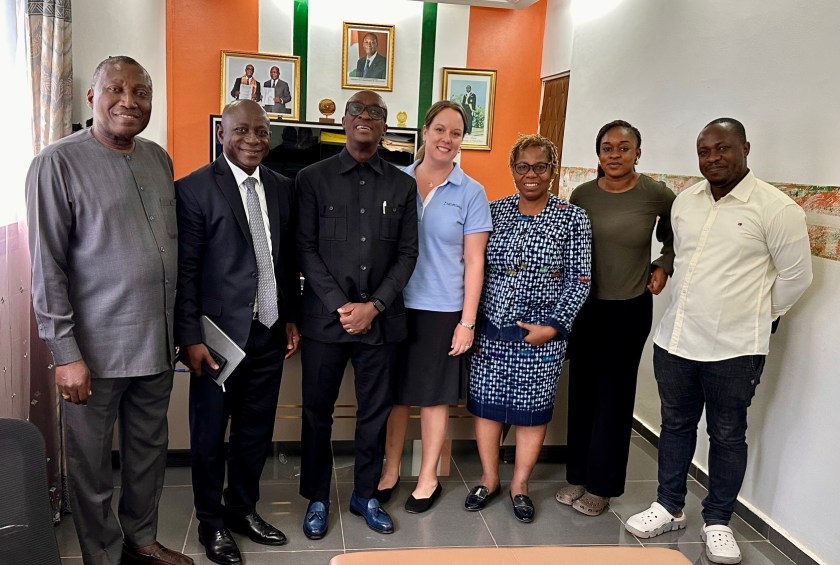
Some of the hospital leadership and neurosurgical team
One surgical resident is currently in rotation in an entirely different unit, but after putting in her working hours there, she’ll come over to the neurosurgical unit to support NeuroKids work and data collection, just because she’s so passionate about neurosurgery and the kids receiving care. Another surgeon spends literally all his days off raising support from generous organizations, donors, and societies, to ensure every child that needs hydrocephalus treatment can get it even if they can’t afford it. You see, in the public hospital system, surgery is free, but the patient still must pay for supplies and medication, and this can be prohibitively expensive for a huge part of the population. Thanks to this surgeon working hard to promote awareness, many children who wouldn’t be able to access the surgery otherwise are granted the hope of a long, healthy life. Surgeries like this are held during ‘camps’ where the neurosurgical team, along with nurses and other necessary providers, volunteer to care for patients while still managing their ‘regular’ workloads. It really is an incredible show of unified support for the patients and their families.
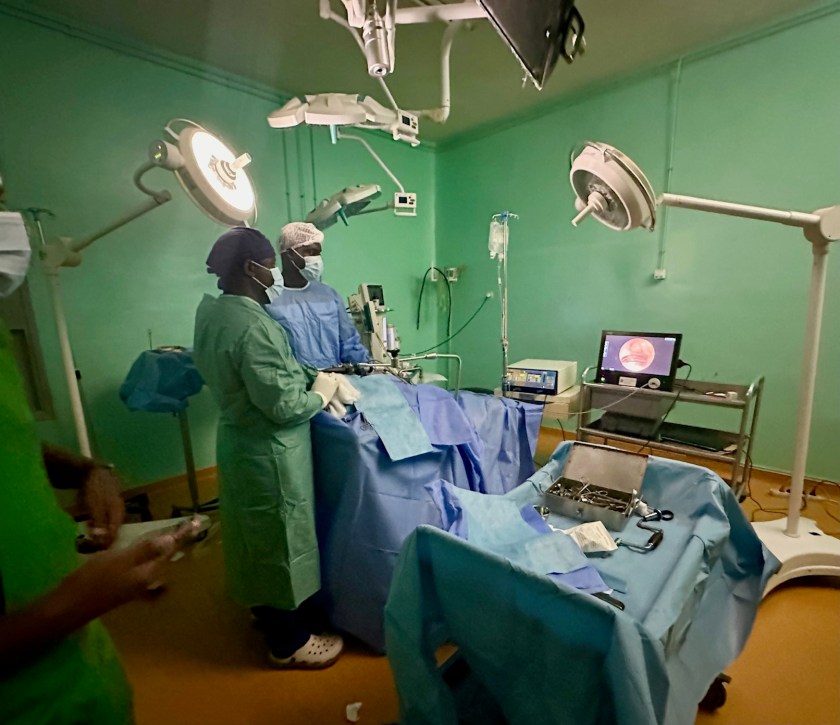
Another special person I met was Angelique*, a two-year-old girl with an unusually large head for her tiny body, the result of untreated hydrocephalus. Too much fluid in the brain forced the head to grow to accommodate; if treated while the baby is still small and the skull bones haven’t fused yet, oftentimes the body will catch up to the head and the child will appear normal, but Angelique’s mother didn’t have the means to travel with her across the country and see a specialist until recently. I had the privilege of watching the surgical team in action performing an endoscopic third ventriculostomy, or ETV, which will help the excess fluid to drain away and relieve the pressure in Angelique’s brain without needing to depend on a shunt. A shunt is a tube inserted in the brain that drains the fluid, and it is widely used around the world but can lead to a lot of potential complications requiring additional surgery. Angelique’s mother was scared but hopeful, and thrilled when the team was able to tell her the surgery went very well. The next day Angelique was alert and eating, which was a huge milestone, as the pressure in her brain had made it difficult for her to keep food down. It was such an honor to meet Angelique and her mother, and to know her child has the opportunity now for a much longer, fuller life because of the incredible skill and dedication of the surgical team in Bouake and the provision of necessary tools thanks to NeuroKids.
Performing the ETV
One of the things I love about this job I get to do is I often have to manage unexpected challenges, to a varying level of success. This time? I was handed a computer that NeuroKids had provided to the team a few years ago but it had become so slow it was basically unusable. We must collect data to really know if our work is successful, so a computer is necessary to be able to submit surgical information to NeuroKids. It took a lot of time and a few pleas for support from my tech-savvy husband back home, but I got it working again and I am still proud I was able to do it!! I’m certainly never bored on trips like this, that’s for sure!
So proud I got a completely unusable french computer to a usable state!
As I’m writing this, I’m watching Cote D’Ivoire fade into the distance out my window as I jet to the next destination on my itinerary. I’m just so grateful I get to do this. I’m grateful I have gotten to spend so much of my life in West Africa that it feels like home. I’m grateful I speak French and the cobwebs in the language center of my brain were quickly brushed out, ensuring mutual understanding and trust. I’m grateful the team has become not only people I work with across the globe but friends, who I now feel I have a much better ability to support so they can continue this important, needed work that can change and save lives. We talked about all the ways we can work well together moving forward, and I take with me a long list of action items we can pursue to continue to expand and offer more and more kids with hydrocephalus and spina bifida hope and growth and longer, healthier lives in Cote D’Ivoire. May it be so.
*Name changed
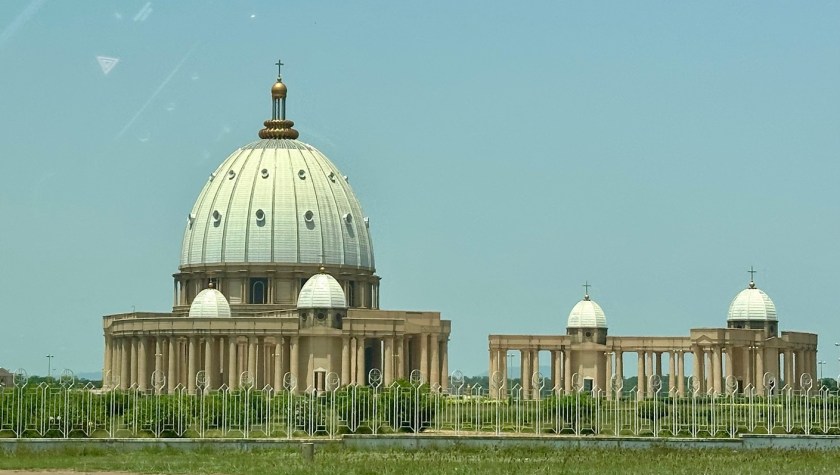
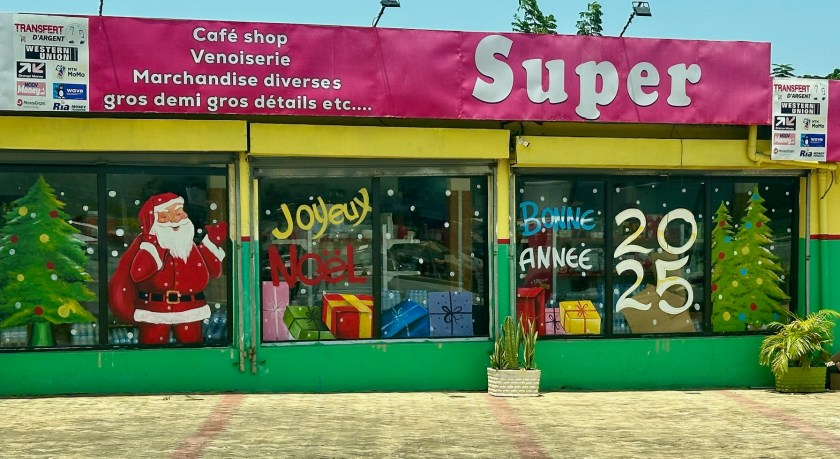
The Basilica in YamoussoukroMerry Christmas and Happy New Year! (taken on April 4)Sunset over a quiet hospital
Blue skies and sunshine greeted me upon landing in Zambia, a welcome change from the rain in Kenya. Lusaka, the capital of Zambia, is the home to University Teaching Hospital (UTH), the largest hospital in the country and home to one of NeuroKids’ newer programs. The program here has been regularly referred to as one of our high performing programs, with a large patient volume and a coordinator who was collecting a ton of good data. This visit was for me to learn and determine both how we can replicate these successes in other sites as well as explore opportunities for expanding our patient and family care programs in the future. I was expecting to learn a lot about the processes, systems, and practices used in the whole patient surgery and care continuum; what I didn’t expect was to be so touched by the heart and actions of the staff and the patients.
~~
The Zambia program began just over six months ago and the neurosurgical unit at UTH serves patients from all over Zambia and into surrounding nations. I was overwhelmed by the physical size of the hospital as I was led through the maze of buildings filled not only with patients but nursing students, medical students, residents, and all the other staff critical to support such a large healthcare and teaching institution. My host assured me everyone gets lost in the first few visits.
I had three days with our coordinator there, doing a lot of expected things like collecting patient data and making follow-up calls to patients who had surgery weeks or months ago. She did all of these things with excellence, of course, but I also got to witness her extraordinary commitment to patients and families as she went above and beyond these expectations.
For example, a four-day-old infant who had been born with a myelomeningocele, a type of spina bifida where the spinal cord didn’t grow correctly and ended up in a bubble on her lower back. She was tiny but healthy, and was waiting to be evaluated by the surgical team to close the defect on her back as well as be evaluated for hydrocephalus (too much fluid in the brain), which often occurs with this type of spina bifida. The baby was fussy and not sleeping well, so our coordinator gently asked the mother a few questions. She was just 18 years old, this was her first baby, and she was alone in the hospital, where bedside nursing is not what it is in the United States, and family members are expected to provide care like food and bathing. This young mother was afraid to bathe her child; she didn’t know how, her baby had this big spinal malformation that was scary, and mom didn’t have a basin to hold the water. Our coordinator went down the hallway in the ward and explained the situation to an older mother who had cared for many babies and grandbabies. She was very happy to help this young mother, gathered the necessary materials, and showed her how to bathe the baby safely. The baby fell right to sleep afterwards. Our coordinator, who is a qualified nurse, also took some time to check the mothers’ cesarean wound and give her guidance on how to manage pain and to keep it clean. What a gift to offer this young mother, support and care in what I am sure was a scary, exhausting time.
A bit later down the hall, we chatted with two young moms whose babies were referred for hydrocephalus. They were scared and had lots of questions, as they had only just been admitted and hadn’t yet seen the doctor. What was wrong with their children? How would this affect their lives? Were they really cursed like so many people believe? Our coordinator quickly walked down the hallway a bit further and asked an 8 year old boy she knew named Daniel* to come down and speak to these scared moms. Daniel had a shunt, the most common treatment for hydrocephalus, that had been inserted when he was an infant and drained the extra fluid in his brain down into his abdominal cavity. He explained that he can’t carry water on his head or play aggressive sports in the field behind his school, but he helps around the house in other ways, is a good student, and hopes to become a doctor one day. The mothers were visibly relieved and grateful.
It was in these conversations and throughout my time in the wards that I saw the true gift of hope that our incredible coordinator tossed like confetti all around her.
~~
Tuesday is clinic day, when dozens of patients come to the outpatient department as part of their regular follow-up from surgery or if they’ve been referred for a neurosurgical consult that doesn’t merit an urgent admission to the ward. Patients had begun lining up well before sunrise; some were from Lusaka while others had travelled for days to get there.
I was especially touched by Natalie, a five-year-old girl who had spina bifida and hydrocephalus and danced her way around the office like any rambunctious five-year-old would. She and I had full conversations in two entirely different languages but somehow, when the language is joy and play and dancing, the words don’t really matter.
Samuel was a 12 year old boy with hydrocephalus who was studying hard and wants to be a civil engineer when he grows up. Ellee was a six year old girl who was a bit slow to speak and had one foot and ankle that didn’t quite work as well as the other kids’, but she did her best to get around and keep up with her siblings and friends. These kids and their parents triumphed over some incredibly challenging situations to get where they were. There were also a few babies who had not yet been named; children of fathers who had abandoned them when their heads had started to grow out of proportion to their bodies; whose mothers’ didn’t want to name them until they were assured a future. Those babies simultaneously broke my heart and reaffirmed my commitment to the work I’m passionate about, where we hope to expand our advocacy efforts and give hope to these mommas who don’t feel they have any.
~~
ChildHelp runs a House of Hope just a few blocks from UTH and we stopped by for a visit. The house is a place for mommas and children who live far away to have a place to stay while waiting for their surgery or care or follow-up appointment. They also offer these mommas training on how to care for some of the special needs that kids with spina bifida may have, and marketable skills like sewing and baking and gardening, for so many of the children’s fathers leave them due to the stigma of a child with special needs. It’s an incredible program with an inspiring staff and we’re exploring ways we can support this type of work in Zambia and beyond.
I learned so much in Zambia, about spina bifida and hydrocephalus care of course, but even more so, about the inspiring mothers, children, and healthcare workers who do the tireless work of spreading guidance, support, and hope for every mother and child. What an honor to be able to witness this small glimpse into their lives and commit to doing everything we can as an organization to support children (and their families) to live long, healthy lives with spina bifida and hydrocephalus.
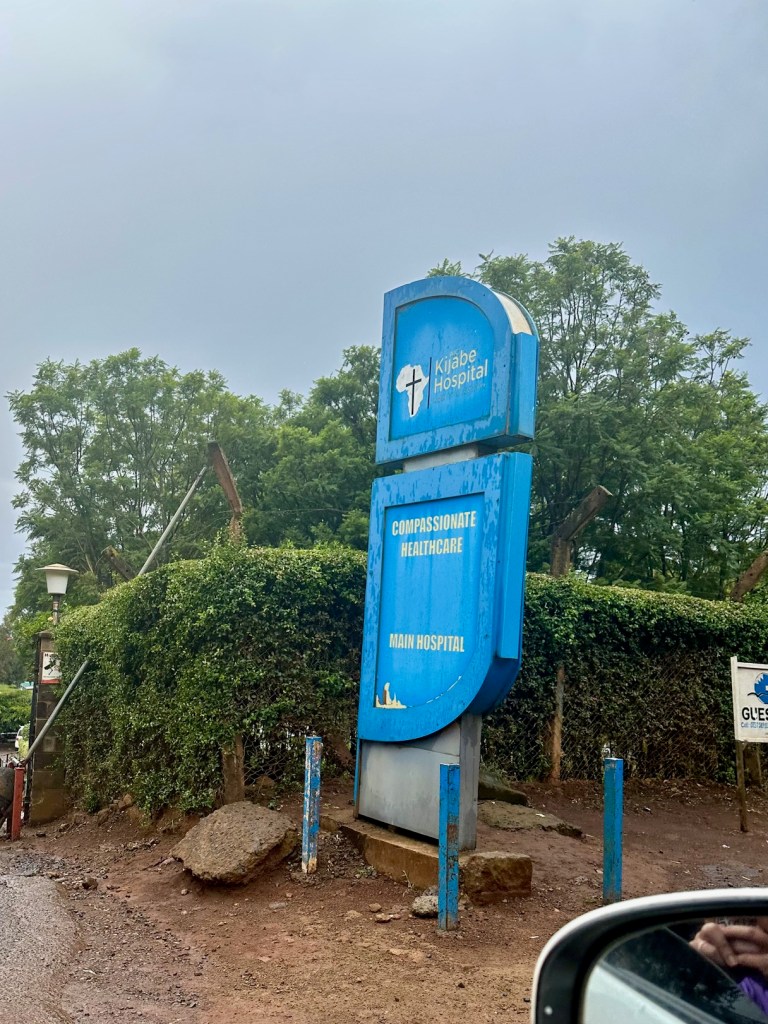
It is Thursday night, and I had hoped to capture a beautiful photo of the sunset, concluding an incredible visit to Kenya. Unfortunately, the rain derailed this plan, as it has all week. Despite the rain and mud, my time in Kenya has been remarkable. Although I am new to my job now with a very cool organization called NeuroKids, I am obviously not new to the continent of Africa nor global surgery, and stepping into Kijabe Hospital felt a bit like returning home again.
~
I joined NeuroKids three months ago as the Program Director. If you’re reading this, you’re probably not new to my wandering, as my career has taken me to dozens of countries through decades of service, ever committed to seeing a day when quality healthcare is accessible and affordable regardless of one’s birthplace. I’m so grateful and honored join with NeuroKids as we work together with incredible partners to improve the lives of children with hydrocephalus and spina bifida.
This trip to Kenya was a learning opportunity for me, to meet some of our dedicated staff and partners and experience the work, challenges, and opportunities firsthand. We’re just ramping up our program in Kijabe, a small community about an hour outside of Nairobi just on the edge of the great Rift Valley. Which, as a side note, I never did see thanks to the constant clouds and rain throughout my time there, though I’m told it’s beautiful. I guess I’ll just have to come back to confirm for myself.
In most countries where NeuroKids works we hire a coordinator; usually a nurse or other healthcare worker familiar with the clinical setting who also has an aptitude for data collection and coordination. This individual collects patient information, coordinates patient care, communicates with families, surgeons, and other specialists, and ensures ongoing care if needed. Training these coordinators is usually done remotely, but we seized this opportunity to bring our Senior Program Coordinator who lives in Ethiopia, our Data Manager who lives in Uganda, and myself together to onboard our new coordinator for Kijabe, in-person while testing a new training platform we’ve recently developed. It was also a great opportunity for me to meet Brian and Meski, and get to know the Kijabe Hospital staff and our phenomenal partner organizations BethanyKids and ChildHelp, who have worked tirelessly in this community and elsewhere to support pediatric patients for decades.
~
Over the years, I have spent considerable time in hospitals like Kijabe, and I am always impressed by the staff’s commitment and dedication to providing the best care possible, even in environments where resources such as electricity, critical supplies and equipment, and even salaries are not always reliable. I felt this dedication to patients the moment I stepped into Kijabe Hospital, and even more than that, I felt hope. Hope is something many of these patients don’t have, in the midst of scary diagnoses and surgeries and uncertainty. But it’s what we all have to offer; though surgery and care, these children and their families can have hope for a brighter future.
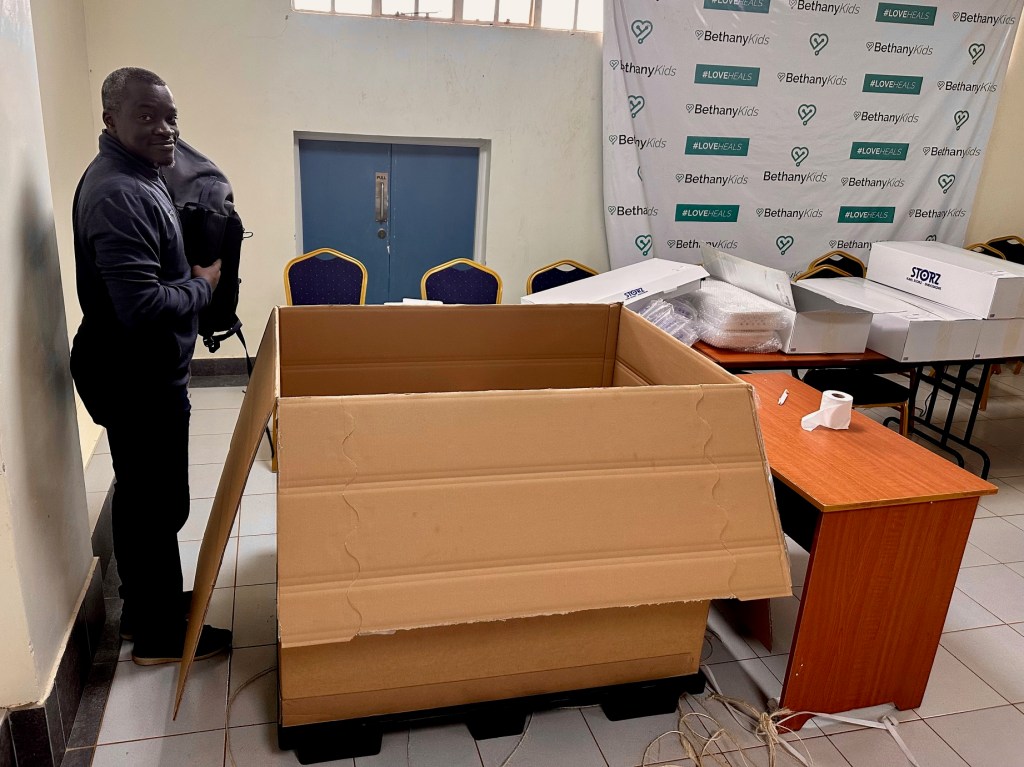
The days were busy; the team was diligent as they effectively condensed weeks of learning into hours, along with organizing medical equipment in preparation for upcoming surgeon training. I learned a great deal about how the programs function, and we brainstormed ways to make them even more efficient and effective. We also shared much laughter, enjoyed the warm hospitality of our Kenyan colleagues, and introduced some of our staff to tacos for the first time.
Relationships are paramount, particularly in this context. Throughout my career in international development, I have attended numerous meetings emphasizing the importance of building relationships before work can commence, which is not often the American way. During my time as a Peace Corps Volunteer in Benin, my first intercultural working experience, I was advised by another volunteer that the only way to be taken seriously by community supporters is to share a beverage under a mango tree first. This has proven true repeatedly in my fifteen-plus years of international development work. While the context varies, the essence remains the same: relationship precedes work. I am grateful to have had this time in Kijabe to connect with the exceptional people at BethanyKids, ChildHelp, Kijabe Hospital, and our own NeuroKids staff.
As I prepare to leave, I am filled with gratitude for these individuals and experiences and the shared dream of supporting children with hydrocephalus and spina bifida in leading long, full, joyous, hope-filled lives. It is an honor to be part of this endeavor. I look forward to returning, and hopefully viewing the elusive Rift Valley and sunset in Kenya.














 Let us begin