Today.

It was five years ago this week that I was consoling sobbing Peace Corps Volunteers after telling them they were evacuating to their home of record which would look and feel like an entirely different world than the one they once knew.  Some of the best humans I’ve ever had the privilege of working with, who had committed their lives and time and resources to service and community building and cultural understanding and teaching, had the world tilt on it’s access and were forced to abandon relationships and projects and passions and pets and figure out what on earth returning to the States meant for them.  It was unfair and unjust and was also the right thing to do, while stories of death and panic filled our newsfeeds, flights were being suspended around the globe and countries’ borders were closing with no warning. There was fear and concern and doubt and bewilderment all swirling over an undercurrent of distrust, unrest, and potential violence. We all truly thought South Africa would be shut down for a few weeks or a few months and the Volunteers would be back soon, no one could have guessed that didn’t happen for more than two years.

I was working through that time purely on adrenaline, keeping my emotions in check and logistics organized while trying to figure out what exactly ‘lockdown’ and getting stuck indefinitely in South Africa would mean for me, and for my work in a Volunteer organization that suddenly found ourselves without Volunteers.  The best word I can find is it was bewildering; like every other minute something new and unexpected was being thrown at us, with no history or experience with anything like it at all to fall back on. There was a deep grief and just the very first glimpses into the fact that the life and work as I knew it would never be the same again. The world looked scary and different, the streets were quiet and the shops were empty, the people you did see were all wearing masks and avoiding interactions with others, and it felt like something out of a low-budget post-apocalyptic movie you stumbled across on late night cable.

It was not entirely unlike what I am feeling this week, five years later, as I watch, bewildered, as the landscape of global health, international development, humanitarian aid and support, peacebuilding, public education, and far more are being dismantled and destroyed.  Friends, colleagues from around the world, good people who want to do good work that is needed and valuable to humankind are watching decades and careers of work go up in flames. People who rely on those people for their livelihoods, their families, their health, just abandoned without warning or transition. It’s cruel and inhumane and will have deep, lasting, devastating impacts on millions of people for decades to come.  The world, once again, looks scary and different for millions affected by these decisions and the lasting effects will be felt by every one of us.

It grieves me deeply. This is not who we are.  Except apparently it is, though, so I’m also looking around me in bewilderment and confusion.  I thought we were people committed to serving the least of these, to loving our neighbors as ourselves, to kindness and compassion.  I thought we were, in general, a generous people who believe all human life and flourishing is valuable and worthy of care and investment and support without reservation.  That’s who I am and that’s who I thought we all were, and I can’t help but feel a little bit lonely, all of the sudden.

I know that this that I am feeling is not a new phenomenon.  In fact, it happens in a lot of countries around the world on a pretty regular basis.  A new regime takes over, whether legitimately or not, and the people directly feel the benefits and/or consequences of that. Systems are built and destroyed and rebuilt, regimes and kingdoms rise and fall, lives are built and destroyed. What a humbling privilege I have, to never have considered that it might happen in my own backyard. If I can chisel out the tiniest of silver linings in this whole situation, it’s that I have slightly more understanding and compassion for those who do go through this more often than me.

There is so much I cannot control outside of myself, so in these bewildering times, I have to commit to keep doing what I know to be right.  I am certain that all of the good people doing good things whose world is upside down right now will continue to do good things, and so will I. I will continue to press on towards what I have been called to; generosity, kindness, compassion, love, peace, hope for the future, a life to the full.  

To those directly affected, my heart is with you.  If I can be of support, I absolutely will, please reach out.

To everyone else, I’m not going to debate things like the value of education, public health, or human lives regardless of nationality or ethnicity or race or religion.  And I truly hope I’m proven wrong sometime soon; I hope I’m blindsided by surprise actions that make me realize oh! we ARE a country and people that is generous, kind, and compassionate.  Oh, may it be so.
On confetti and dancing.

(Written February 6, 2025)

Blue skies and sunshine greeted me upon landing in Zambia, a welcome change from the rain in Kenya.  Lusaka, the capital of Zambia, is the home to University Teaching Hospital (UTH), the largest hospital in the country and home to one of NeuroKids’ newer programs.  The program here has been regularly referred to as one of our high performing programs, with a large patient volume and a coordinator who was collecting a ton of good data.  This visit was for me to learn and determine both how we can replicate these successes in other sites as well as explore opportunities for expanding our patient and family care programs in the future.  I was expecting to learn a lot about the processes, systems, and practices used in the whole patient surgery and care continuum; what I didn’t expect was to be so touched by the heart and actions of the staff and the patients.

~~

The Zambia program began just over six months ago and the neurosurgical unit at UTH serves patients from all over Zambia and into surrounding nations. I was overwhelmed by the physical size of the hospital as I was led through the maze of buildings filled not only with patients but nursing students, medical students, residents, and all the other staff critical to support such a large healthcare and teaching institution. My host assured me everyone gets lost in the first few visits. 

I had three days with our coordinator there, doing a lot of expected things like collecting patient data and making follow-up calls to patients who had surgery weeks or months ago.  She did all of these things with excellence, of course, but I also got to witness her extraordinary commitment to patients and families as she went above and beyond these expectations.

For example, a four-day-old infant who had been born with a myelomeningocele, a type of spina bifida where the spinal cord didn’t grow correctly and ended up in a bubble on her lower back. She was tiny but healthy, and was waiting to be evaluated by the surgical team to close the defect on her back as well as be evaluated for hydrocephalus (too much fluid in the brain), which often occurs with this type of spina bifida.  The baby was fussy and not sleeping well, so our coordinator gently asked the mother a few questions. She was just 18 years old, this was her first baby, and she was alone in the hospital, where bedside nursing is not what it is in the United States, and family members are expected to provide care like food and bathing.  This young mother was afraid to bathe her child; she didn’t know how, her baby had this big spinal malformation that was scary, and mom didn’t have a basin to hold the water. Our coordinator went down the hallway in the ward and explained the situation to an older mother who had cared for many babies and grandbabies. She was very happy to help this young mother, gathered the necessary materials, and showed her how to bathe the baby safely. The baby fell right to sleep afterwards.  Our coordinator, who is a qualified nurse, also took some time to check the mothers’ cesarean wound and give her guidance on how to manage pain and to keep it clean.  What a gift to offer this young mother, support and care in what I am sure was a scary, exhausting time.

A bit later down the hall, we chatted with two young moms whose babies were referred for hydrocephalus. They were scared and had lots of questions, as they had only just been admitted and hadn’t yet seen the doctor. What was wrong with their children? How would this affect their lives? Were they really cursed like so many people believe?  Our coordinator quickly walked down the hallway a bit further and asked an 8 year old boy she knew named Daniel* to come down and speak to these scared moms.  Daniel had a shunt, the most common treatment for hydrocephalus, that had been inserted when he was an infant and drained the extra fluid in his brain down into his abdominal cavity.  He explained that he can’t carry water on his head or play aggressive sports in the field behind his school, but he helps around the house in other ways, is a good student, and hopes to become a doctor one day. The mothers were visibly relieved and grateful.

It was in these conversations and throughout my time in the wards that I saw the true gift of hope that our incredible coordinator tossed like confetti all around her. 

~~

Tuesday is clinic day, when dozens of patients come to the outpatient department as part of their regular follow-up from surgery or if they’ve been referred for a neurosurgical consult that doesn’t merit an urgent admission to the ward.  Patients had begun lining up well before sunrise; some were from Lusaka while others had travelled for days to get there. 

I was especially touched by Natalie, a five-year-old girl who had spina bifida and hydrocephalus and danced her way around the office like any rambunctious five-year-old would.  She and I had full conversations in two entirely different languages but somehow, when the language is joy and play and dancing, the words don’t really matter.

Samuel was a 12 year old boy with hydrocephalus who was studying hard and wants to be a civil engineer when he grows up.  Ellee was a six year old girl who was a bit slow to speak and had one foot and ankle that didn’t quite work as well as the other kids’, but she did her best to get around and keep up with her siblings and friends.  These kids and their parents triumphed over some incredibly challenging situations to get where they were.  There were also a few babies who had not yet been named; children of fathers who had abandoned them when their heads had started to grow out of proportion to their bodies; whose mothers’ didn’t want to name them until they were assured a future.  Those babies simultaneously broke my heart and reaffirmed my commitment to the work I’m passionate about, where we hope to expand our advocacy efforts and give hope to these mommas who don’t feel they have any.   

~~

ChildHelp runs a House of Hope just a few blocks from UTH and we stopped by for a visit.  The house is a place for mommas and children who live far away to have a place to stay while waiting for their surgery or care or follow-up appointment.  They also offer these mommas training on how to care for some of the special needs that kids with spina bifida may have, and marketable skills like sewing and baking and gardening, for so many of the children’s fathers leave them due to the stigma of a child with special needs.   It’s an incredible program with an inspiring staff and we’re exploring ways we can support this type of work in Zambia and beyond.

I learned so much in Zambia, about spina bifida and hydrocephalus care of course, but even more so, about the inspiring mothers, children, and healthcare workers who do the tireless work of spreading guidance, support, and hope for every mother and child.  What an honor to be able to witness this small glimpse into their lives and commit to doing everything we can as an organization to support children (and their families) to live long, healthy lives with spina bifida and hydrocephalus.

*All names changed to protect privacy.

On raindrops and hope.

(Written January 30, 2025)

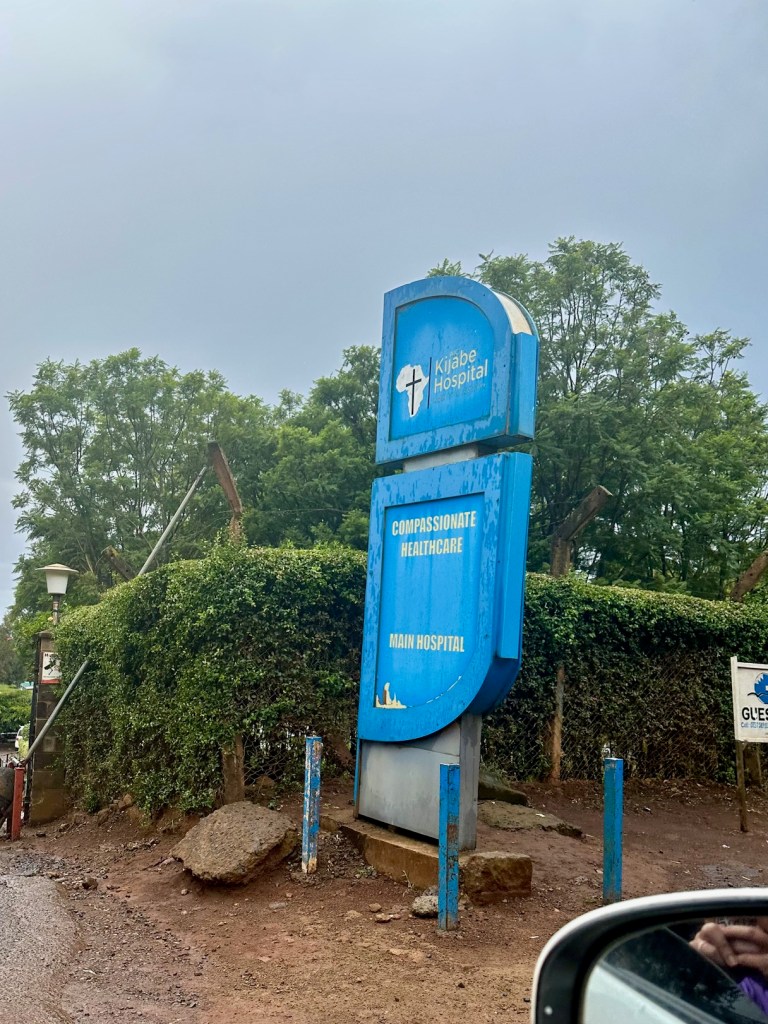
It is Thursday night, and I had hoped to capture a beautiful photo of the sunset, concluding an incredible visit to Kenya. Unfortunately, the rain derailed this plan, as it has all week.  Despite the rain and mud, my time in Kenya has been remarkable. Although I am new to my job now with a very cool organization called NeuroKids, I am obviously not new to the continent of Africa nor global surgery, and stepping into Kijabe Hospital felt a bit like returning home again.

~

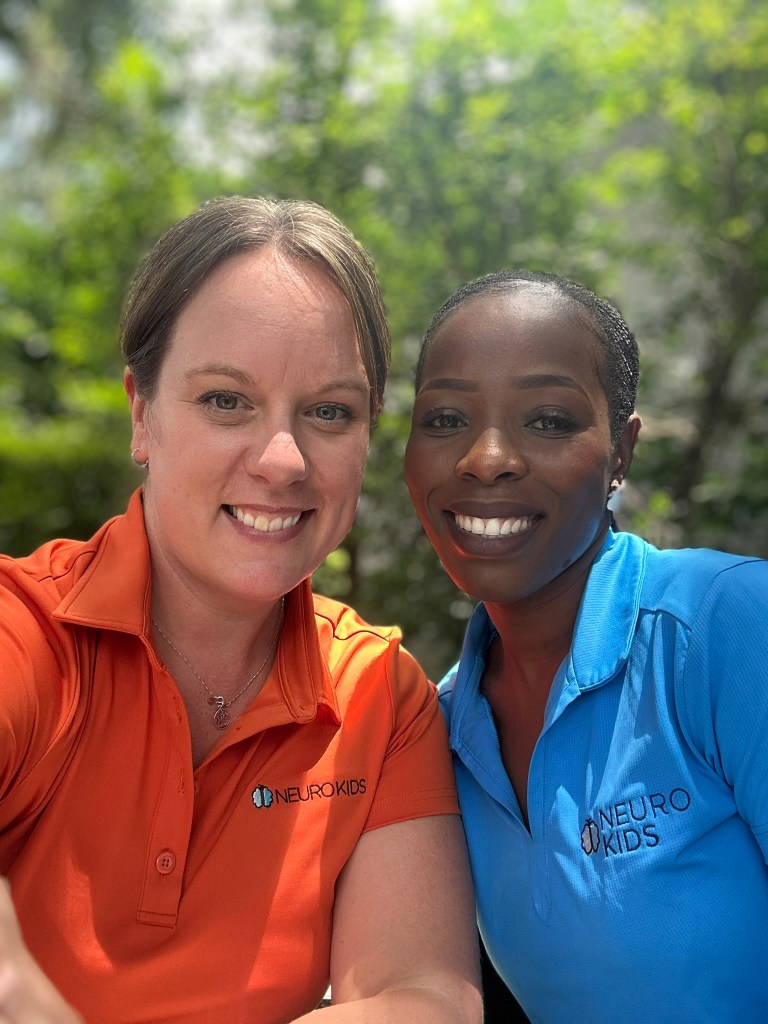
I joined NeuroKids three months ago as the Program Director.  If you’re reading this, you’re probably not new to my wandering, as my career has taken me to dozens of countries through decades of service, ever committed to seeing a day when quality healthcare is accessible and affordable regardless of one’s birthplace.  I’m so grateful and honored join with NeuroKids as we work together with incredible partners to improve the lives of children with hydrocephalus and spina bifida. 

This trip to Kenya was a learning opportunity for me, to meet some of our dedicated staff and partners and experience the work, challenges, and opportunities firsthand.  We’re just ramping up our program in Kijabe, a small community about an hour outside of Nairobi just on the edge of the great Rift Valley. Which, as a side note, I never did see thanks to the constant clouds and rain throughout my time there, though I’m told it’s beautiful.  I guess I’ll just have to come back to confirm for myself. 

In most countries where NeuroKids works we hire a coordinator; usually a nurse or other healthcare worker familiar with the clinical setting who also has an aptitude for data collection and coordination.  This individual collects patient information, coordinates patient care, communicates with families, surgeons, and other specialists, and ensures ongoing care if needed.  Training these coordinators is usually done remotely, but we seized this opportunity to bring our Senior Program Coordinator who lives in Ethiopia, our Data Manager who lives in Uganda, and myself together to onboard our new coordinator for Kijabe, in-person while testing a new training platform we’ve recently developed. It was also a great opportunity for me to meet Brian and Meski, and get to know the Kijabe Hospital staff and our phenomenal partner organizations BethanyKids and ChildHelp, who have worked tirelessly in this community and elsewhere to support pediatric patients for decades.

~

Over the years, I have spent considerable time in hospitals like Kijabe, and I am always impressed by the staff’s commitment and dedication to providing the best care possible, even in environments where resources such as electricity, critical supplies and equipment, and even salaries are not always reliable. I felt this dedication to patients the moment I stepped into Kijabe Hospital, and even more than that, I felt hope.  Hope is something many of these patients don’t have, in the midst of scary diagnoses and surgeries and uncertainty.  But it’s what we all have to offer; though surgery and care, these children and their families can have hope for a brighter future.

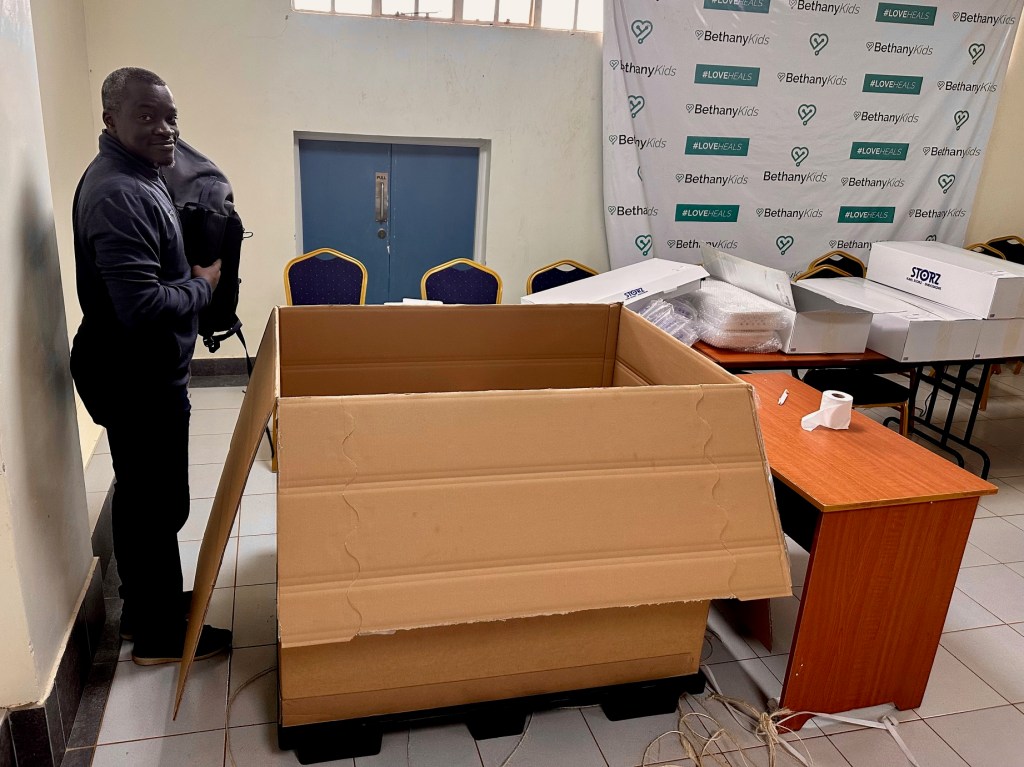
The days were busy; the team was diligent as they effectively condensed weeks of learning into hours, along with organizing medical equipment in preparation for upcoming surgeon training. I learned a great deal about how the programs function, and we brainstormed ways to make them even more efficient and effective. We also shared much laughter, enjoyed the warm hospitality of our Kenyan colleagues, and introduced some of our staff to tacos for the first time.

Relationships are paramount, particularly in this context. Throughout my career in international development, I have attended numerous meetings emphasizing the importance of building relationships before work can commence, which is not often the American way. During my time as a Peace Corps Volunteer in Benin, my first intercultural working experience, I was advised by another volunteer that the only way to be taken seriously by community supporters is to share a beverage under a mango tree first. This has proven true repeatedly in my fifteen-plus years of international development work. While the context varies, the essence remains the same: relationship precedes work. I am grateful to have had this time in Kijabe to connect with the exceptional people at BethanyKids, ChildHelp, Kijabe Hospital, and our own NeuroKids staff.

As I prepare to leave, I am filled with gratitude for these individuals and experiences and the shared dream of supporting children with hydrocephalus and spina bifida in leading long, full, joyous, hope-filled lives. It is an honor to be part of this endeavor.  I look forward to returning, and hopefully viewing the elusive Rift Valley and sunset in Kenya.